Sugira Muryango (Family Strengthening Intervention - FSI) Program
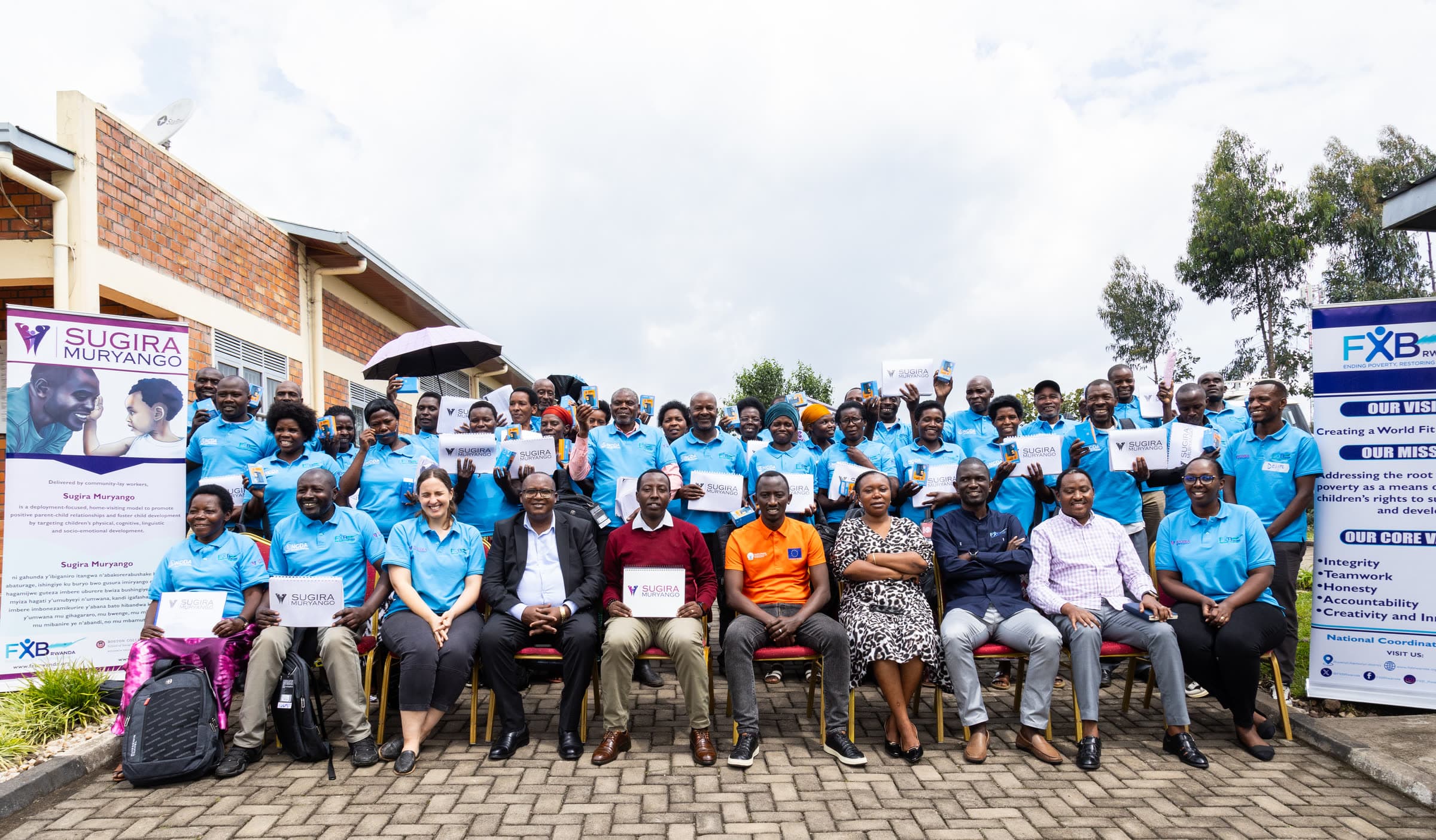
Home visiting for families with young children, delivered by trained community coaches.
ABOUT THIS PROGRAMME
SUGIRA MURYANGO Program Summary
The Family Strengthening Intervention for Early Childhood Development and Violence Prevention (FSI-ECD+VP), also known in Rwanda as Sugira Muryango (SM) or Strengthen the Family, stems from early work with HIV affected families leading to the development of the Family Strengthening Intervention for Families/Children Affected by HIV/AIDS (R34MH084679) and has transformed to build parent capabilities, increase responsive parenting of both mothers and fathers, reduce family violence, support early childhood development, and strengthen family functioning.
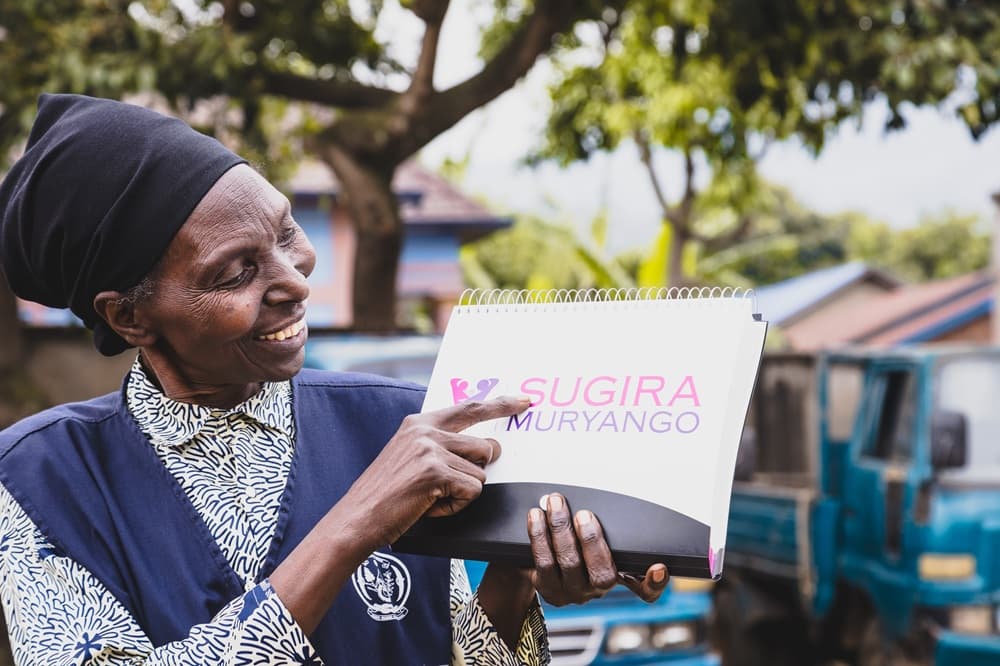
This intervention, the FSI-ECD+VP, informed by the World Health Organization (WHO) Care for Child Development package, (a) builds parenting skills and improves knowledge of ECD to create a safe, stimulating, and nourishing environment for the growth of young children with a focus on nutrition, health, and hygiene promotion; (b) coaches parents of young children in “serve and return” interactions and playful parenting; (c) develops a “family narrative” to build hope and highlight sources of resilience for addressing challenges and reducing the risk of violence; (d) strengthens problem-solving skills as well as the navigation of formal and informal community resources; and, (e) builds skills in parental emotion regulation and alternatives to harsh punishment. The FSI-ECD+VP integrates these core components into 12 modules and two booster/follow-up sessions through a home-visiting model and active coaching.
Currently, the intervention has targeted families in extreme poverty with young children aged 0-36 months across three districts, with plans to expand to additional districts. We have reached over 33,000 Rwandan families since 2018 up to date. We have integrated the intervention into poverty reduction, social protection, and child protection initiatives, aligning it with the Government of Rwanda’s existing structures. We are proudly collaborating with multiple funders and ministries in Rwanda to further strengthen our program to scale, including testing a continuous enrollment model and developing a digital dashboard to streamline the intervention effectiveness. During this period, FXB Rwanda and Boston College are collaborating in investigating the digital dashboard-supported delivery of the intervention in terms of its reach, efficiency, and cost effectiveness to enhance our understanding of the FSI-ECD+VP program in Rwanda.
We can recall that, Sugira Muryango is a collaboration between the Ministry of Gender and Family Promotion (MIGEPROF), the National Child Development Agency (NCDA), the University of Rwanda (UoR) Centre for Mental Health, FXB-Rwanda, Boston College’s Research Program on Children and Adversity (RPCA) and other stakeholders.
Evolution & Evidence
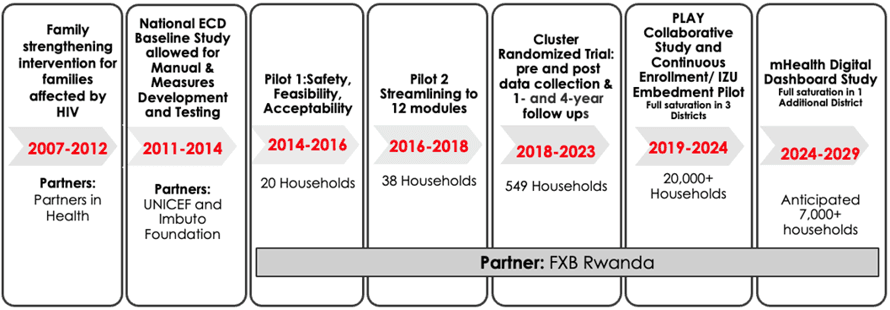
The origins of the Sugira Muryango partnership began in 2007 during the development of a Family Strengthening Intervention (FSI) targeting Rwandan families with children ages 7-17 who were affected by HIV. A randomized control pilot showed that a home-based intervention delivered by non-specialist workers was acceptable and feasible and that working with the whole family could help to reduce depression in children facing adversity (Betancourt et al., 2017). Based on GoR and other partners’ feedback, the FSI intervention was adapted to address violence in the household and specifically target families with younger children living in extreme poverty.
Adaptations were tested with an open trial and randomized pilot utilizing the GoR’s materials on promoting nutrition and hygiene and the broader UNICEF Care for Child Development curriculum. Results showed that this new FSI-ECD intervention, now called Sugira Muryango, was feasible and acceptable, improves caregivers’ nurturing care and stimulation practices, and may reduce violence in households living in extreme poverty (Betancourt et al., 2018; Barnhart et al., 2020).
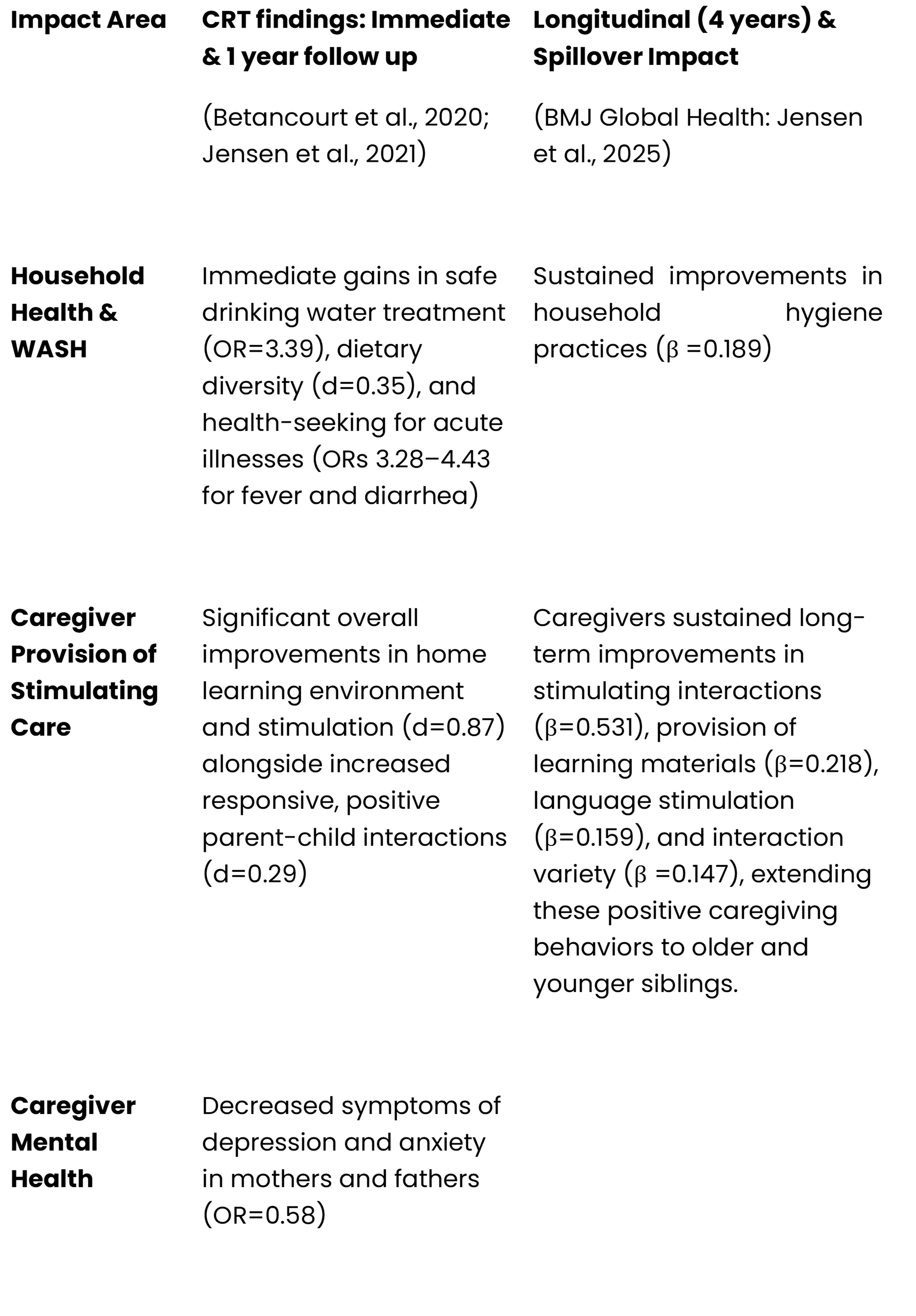
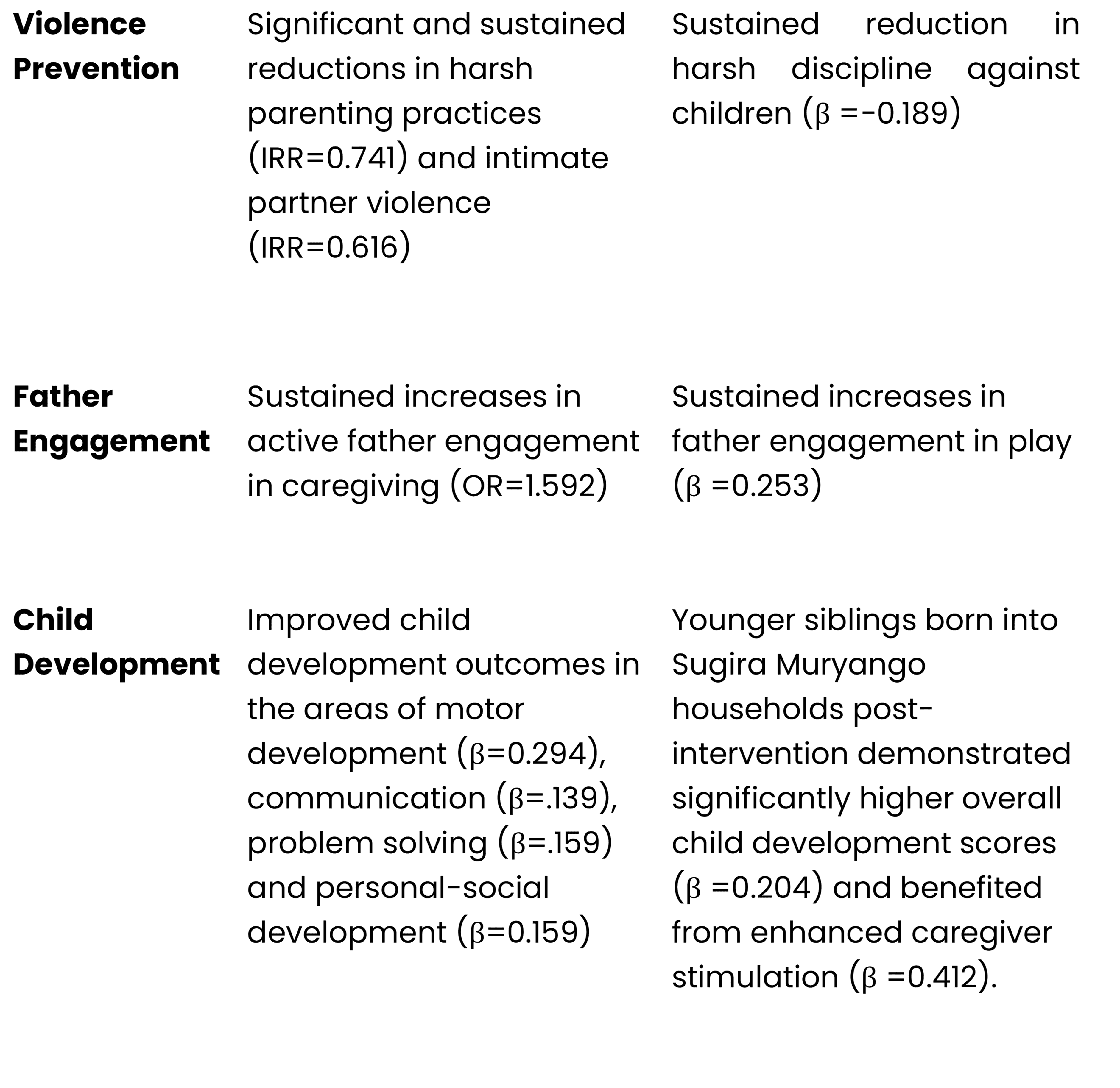
A Cluster Randomized Trial of 1,049 families demonstrated that Sugira Muryango delivers immediate, 12-month, and 4-year sustained impacts across child development, caregiver mental health, family violence prevention, and household health, extending benefits to non-targeted siblings.
Due to its rigorous evidence base, Sugira Muryango expanded in collaboration with NCDA, embedding the program with national child protection community volunteers - the Inshuti z’Umuryango (IZU). A Hybrid Type-II Effectiveness-Implementation quasi-experimental study demonstrated positive intervention impacts when delivered by the government IZU workforce (Black et al, 2025). Results showed that even with the government workforce engaged as interventionists, Sugira Muryango is effective across key areas of child protection, nutrition, health, hygiene, and nurturing care for young children. Program Evolution Diagram.
For more details and research done since the program inception you can visit the Boston college website here: Sugira Muryango Strong Families history and publications
RESULTS
- Since November 2019 to date, Sugira Muryango has trained over 5000 IZU workforces across 5 districts,
- Trained 386 IZU Coordinators on the Sugira Muryango quality monitoring and supervision,
- Trained 195 Cell mentors on the program quality monitoring and supervision,
- Trained over 9,500 Local leaders across 5 districts on the Sugira Muryango Delivery approach, Violence prevention, and Play Collaborative,
- Improved lives over 38,000 children with evidence based ECD home visiting, interventions and over 65,000 caregivers were empowered with skills on responsive parenting.
WHAT IT DELIVERS
- Behavior Change Interventions
- Family Resilience Interventions
- Community Engagement
- RUNS
- Ongoing
- FUNDED BY
- Government of Rwanda and development partners
- DISTRICTS
- KireheMusanzeNgomaNyanzaRubavu